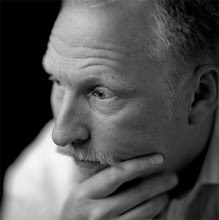
Charlie Manuel and the Integrity of the Game
Eyes are on Phillies manager Charlie Manuel this upcoming weekend as they play the Braves to close out the season. The Phils have already clinched the division, but the Braves are fighting for a wild card berth with whoever doesn't win the NL West, the Padres or Giants. There is concern on behalf of the west team that Manuel will juggle his rotation and rest his stars to get ready for the playoffs. This would give the Braves an unfair advantage in the wild card race. The same situation arose several years ago with the Braves' Bobby Cox.
A long standing ethical baseball tradition holds that if you're playing against a team at the end of the season, and that team is in the pennant race, you push your experimentation with your September call-ups aside, and go at the game with your best. This guarantees the other team in the pennant race that things will be fair. This upholds the integrity of the game. And I completely agree with this tradition.
Except in the Phillies' case. Why? Well, traditionally, baseball didn't have divisions. Each league consisted of all teams racing for the same pennant. This meant that only the teams that were no longer in any pennant race at all were facing teams that were. The season no longer mattered to them because they had no shot at the pennant, or a yet to be created division title. When division play came along, however, each division had an even number of teams, and the schedule guaranteed that the last several weeks were played amongst teams in their own divisions. So the tradition of not rolling over against a playoff contender stood.
But then several new developments came on the scene. With AL expansion in '77, and NL expansion in '93, there were no longer an even number of teams in a division. This meant that during the pennant race, there was always at least one series playing between teams of opposite divisions. Then with realignment in '94, a wild card was introduced along with three divisions. Most divisions didn't (and still don't) have an even number of teams. Now, it's guaranteed that teams playing out of their divisions, and against wild card contenders, happens more often. So, we're bound to see this situation occur where a team that has already clinched a playoff spot will play against teams that haven't yet.
But it's also another baseball tradition, albeit one of strategy, to do whatever necessary to get your team ready for the playoffs. Rest stars, juggle rotations, use your call-ups. And traditionally, since that team had already clinched, it meant that no other team they faced was still in a pennant race. They could afford to lose games after clinching, since those games had no importance, whereas the post-season games did.
So, what the addition of a wild card and interdivision play caused by odd numbers of teams within divisions has done is to pit two baseball traditions against each other in a head-to-head fashion. And if you're the team that has already won a spot in the playoffs, your self-interest trumps all others. Period. In essence, what people are calling on Charlie Manuel to do is to jeopardize his team's ability to win the World Series just to satisfy the desires of a team that obviously hasn't played well enough to have already clinched. And that is a ridiculous thing to ask.
The real question about the integrity of the game that should be asked is whether interdivision play at the end of the season and a wild card format are the ideas that compromise the integrity of the game. Even though my Giants could be affected by Manuel's managing decisions this weekend, I realize that it's in his best interest to try to win the World Series in any way possible. I would expect nothing less than for Manuel to tell his critics to shove it, even if those critics were Giants fans and management.
A long standing ethical baseball tradition holds that if you're playing against a team at the end of the season, and that team is in the pennant race, you push your experimentation with your September call-ups aside, and go at the game with your best. This guarantees the other team in the pennant race that things will be fair. This upholds the integrity of the game. And I completely agree with this tradition.
Except in the Phillies' case. Why? Well, traditionally, baseball didn't have divisions. Each league consisted of all teams racing for the same pennant. This meant that only the teams that were no longer in any pennant race at all were facing teams that were. The season no longer mattered to them because they had no shot at the pennant, or a yet to be created division title. When division play came along, however, each division had an even number of teams, and the schedule guaranteed that the last several weeks were played amongst teams in their own divisions. So the tradition of not rolling over against a playoff contender stood.
But then several new developments came on the scene. With AL expansion in '77, and NL expansion in '93, there were no longer an even number of teams in a division. This meant that during the pennant race, there was always at least one series playing between teams of opposite divisions. Then with realignment in '94, a wild card was introduced along with three divisions. Most divisions didn't (and still don't) have an even number of teams. Now, it's guaranteed that teams playing out of their divisions, and against wild card contenders, happens more often. So, we're bound to see this situation occur where a team that has already clinched a playoff spot will play against teams that haven't yet.
But it's also another baseball tradition, albeit one of strategy, to do whatever necessary to get your team ready for the playoffs. Rest stars, juggle rotations, use your call-ups. And traditionally, since that team had already clinched, it meant that no other team they faced was still in a pennant race. They could afford to lose games after clinching, since those games had no importance, whereas the post-season games did.
So, what the addition of a wild card and interdivision play caused by odd numbers of teams within divisions has done is to pit two baseball traditions against each other in a head-to-head fashion. And if you're the team that has already won a spot in the playoffs, your self-interest trumps all others. Period. In essence, what people are calling on Charlie Manuel to do is to jeopardize his team's ability to win the World Series just to satisfy the desires of a team that obviously hasn't played well enough to have already clinched. And that is a ridiculous thing to ask.
The real question about the integrity of the game that should be asked is whether interdivision play at the end of the season and a wild card format are the ideas that compromise the integrity of the game. Even though my Giants could be affected by Manuel's managing decisions this weekend, I realize that it's in his best interest to try to win the World Series in any way possible. I would expect nothing less than for Manuel to tell his critics to shove it, even if those critics were Giants fans and management.
Labels: Integrity of the Game, Pennant Races, Tradition
posted by Steve Scott at 3:34 PM
0 comments